Wednesday, July 1, 2026
The Cultural Review
CultureArtMediaBooks
The Cultural Review

Exploring the Intersection of Art, Culture, and Ideas

The Cultural Review offers insightful analysis and commentary on art, media, books, fashion, music, and trends shaping contemporary culture. We provide a platform for thought-provoking discussions and diverse perspectives, fostering a deeper understanding of the world around us.

Sections

  • Culture
  • Art
  • Media
  • Books
  • Fashion
  • Music
  • Trends

Writers

Meet our writers →

Trending Topics

DancehallSustainable FashionWell BeingWellnessCultural Impact

About

  • Contact
  • Privacy Policy
  • Terms of Service

© 2026 The Cultural Review. All rights reserved.

  1. Home
  2. /Wellness
  3. /What Are Forest Bathing Benefits for Mental Well-being?
Wellness

What Are Forest Bathing Benefits for Mental Well-being?

A recent UK study of nearly 20,000 people confirmed that spending just two hours a week in nature significantly improved their self-reported health and happiness.

YE
Yasmin El-Sayed

May 10, 2026 · 4 min read

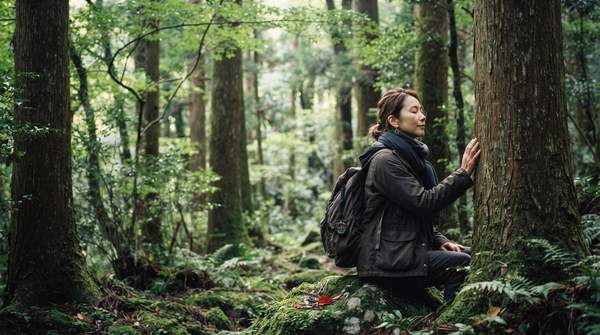
A person meditating peacefully in a sun-dappled forest, experiencing the calming and restorative benefits of forest bathing.

A recent UK study of nearly 20,000 people confirmed that spending just two hours a week in nature significantly improved their self-reported health and happiness. This finding points to the widespread, accessible impact natural environments have on overall well-being, offering a simple yet powerful intervention for daily life.

Decades of research confirm the profound physiological and psychological benefits of forest bathing, a practice rooted in deliberate nature immersion. Yet, this evidence-backed intervention remains largely overlooked as a mainstream health strategy. A missed opportunity for public health is represented by this gap between scientific understanding and practical application.

As awareness grows and scientific backing strengthens, forest bathing is poised to become a widely accepted and integrated component of public health and personal wellness strategies. This shift could offer a low-cost, high-impact intervention for ongoing public health crises.

What is Forest Bathing (Shinrin-Yoku)?

Forest bathing, or Shinrin-Yoku, is not merely a walk in the woods; it is a conscious, mindful immersion in the forest atmosphere. Originating in Japan during the 1980s for preventative health and stress reduction, Shinrin-Yoku has been shown to reduce stress, boost moods, and improve cognitive function, according to the Global Wellness Institute.

While the healing power of nature has long been explored, formal scientific inquiry into Shinrin-Yoku surged more recently. A review identified 64 studies evaluating Shinrin-Yoku across various populations, published from 2007 to 2017, with a significant portion of these studies conducted after 2017, according to pmc.ncbi.nlm.nih.gov. This focused scientific effort over the last two decades seeks to understand the specific mechanisms behind its observed benefits.

The Measurable Health Benefits of Nature Immersion

One forest bathing study reported a significant decrease in participants' systolic and diastolic blood pressure, alongside reduced negative mood states, according to pmc.ncbi.nlm.nih.gov. These objective physiological changes confirm the immediate impact of nature immersion on the body's stress response, actively reducing cardiovascular strain.


Cortisol levels, a primary stress hormone, decreased in subjects after a forest walk compared to those in a laboratory setting, according to health. This suggests the forest environment provides a biological reset. A Japanese study further showed a rise in natural killer cells among individuals who spent three days and two nights in a forest, indicating a profound biological impact beyond general stress reduction.

These physiological shifts reveal forest bathing as more than a pleasant pastime; it is a potent, underutilized biological reset mechanism. It actively rebalances the body's stress response, enhances immune function, and improves cardiovascular markers at a cellular level. These are benefits healthcare systems are failing to leverage.

Forest bathing's accessibility is underscored by the minimal time commitment—just 120 minutes per week. Its proven effectiveness even in urban environments, as reported by Washingtonpost, suggests adoption barriers are more cultural or systemic than practical. This low-cost, high-impact intervention could reach broad segments of the population.

While general nature exposure improves mood, the specific biological changes in forest bathing indicate a deeper benefit. Decreased cortisol, reduced blood pressure, and a rise in natural killer cells confirm it is not merely a mood booster but a fundamental biological reset. This profound impact on the body's core systems is often overlooked.

Why Forest Bathing Deserves Mainstream Attention

Decades of research consistently show forest bathing reduces stress, improves attention, boosts immunity, and lifts mood, according to health. It also reduces depression, and improves pulmonary and cardiovascular health, as highlighted by Washingtonpost. These findings position it as a powerful, non-pharmacological intervention for widespread public health challenges.

Specific physiological improvements further bolster its case: 57% of participants showed increased heart rate variability after a six-week program, according to the Global Wellness Institute. Improved autonomic nervous system function, a key indicator of resilience, is signaled. Despite this consistent evidence, public health initiatives remain largely blind to forest bathing's potential as a low-cost, high-impact intervention.

What are the psychological benefits of forest bathing?

Forest bathing offers specific psychological benefits, including reduced negative mood states and improved cognitive function. The calming forest environment fosters mental clarity and mitigates attentional fatigue, contributing to emotional balance and mental restoration.

What is the scientific evidence for forest bathing benefits?

Scientific evidence for forest bathing is extensive. Measurable physiological changes are demonstrated by studies: decreased cortisol, reduced blood pressure, and increased natural killer cell activity. These objective markers confirm its profound impact on stress reduction, immune function, and cardiovascular health.

Can forest bathing reduce anxiety and depression?

Yes, forest bathing can reduce anxiety and depression symptoms. Studies show significant decreases in negative mood states. Its ability to lower stress hormones like cortisol and improve psychological well-being directly alleviates these conditions.

If public health initiatives fail to proactively integrate practices like forest bathing, they will likely overlook a low-cost intervention shown to significantly improve well-being, hindering efforts to address widespread health challenges.

Related Coverage from Wellness

  • What is eco-anxiety and its global mental health impact?
  • What Is Ecotherapy and Why Does It Matter for Mental Wellness?

Tags

Forest BathingMental HealthNature TherapyWell BeingMindfulnessStress ReductionAnxiety ReliefShinrin Yoku
YE

Yasmin El-Sayed

Wellness & Culture Writer

Yasmin explores wellness through a cultural context, examining how societal trends and artistic expression influence our well-being.

More from Wellness

Person meditating while creating art, demonstrating mindful art practices for stress reduction and improved mental well-being.

What Are Mindful Art Practices and Their Well-being Benefits?

Mindfulness-Based Stress Reduction (MBSR) interventions significantly reduce perceived stress by up to 33% and mental health issues by a remarkable 40%, according to Open Psychology Journal .

Yasmin El-Sayed· Jul 1
A Mongolian steppe landscape with a ger, grazing livestock, and a distant horseman, symbolizing nomadic life and environmental challenges.

Nomadic Traditions: Environmental Impact, Well-being & Future

In Mongolia, over 71 million livestock in 2022 exceeded pastureland capacity by 2.

Yasmin El-Sayed· Jun 30
Diverse individuals and groups experiencing joy and connection through various cultural activities, highlighting the positive impact on well-being.

What is Cultural Wellness and Why Does It Matter for Holistic Well-being?

Engaging in cultural activities can reduce cognitive decline, depression, and anxiety, offering a powerful, yet often overlooked, pathway to better mental health.

Yasmin El-Sayed· Jun 28
Travelers joyfully participating in a vibrant cultural festival, experiencing deep connection and healing through immersive experiences.

What is well-being tourism and why does cultural immersion boost traveler health?

Burnout, manifesting in body, psychology, and interpersonal communication, is a pervasive consequence of fierce social pressure and competition in modern life.

Yasmin El-Sayed· Jun 27

Trending Now

1
Why AhMei-Paintings Appeals to Buyers Looking for Original Artwork

Why AhMei-Paintings Appeals to Buyers Looking for Original Artwork

Art· 26 views
2
How Anti-Aging Bed® Med Beds Became Part of a 25,000-Person Wellness Story

How Anti-Aging Bed® Med Beds Became Part of a 25,000-Person Wellness Story

Trends· 19 views
3
A vibrant, monumental street art mural on a brick wall in a bustling city at dusk, with people admiring the colorful artwork under warm streetlights.

The History and Cultural Significance of Street Art and Graffiti: An Explainer

Art· 22 views
4
A split image showing a 19th-century worker in durable denim juxtaposed with a modern person wearing stylish denim, illustrating the fabric's transformation from workwear to a fashion icon.

The Cultural Significance of Denim: From Workwear to Wardrobe Staple

Fashion· 23 views
5
Finally, a Solution: How Science and Snark Makes Finding Perfect Gifts for Lab Technicians Easy

Finally, a Solution: How Science and Snark Makes Finding Perfect Gifts for Lab Technicians Easy

Trends· 15 views
6
Independent musicians in Oakland, California, promoting vinyl records and engaging with fans at a street market, symbolizing a decentralized music discovery movement.

Top 10 New Music Discovery Platforms Beyond Streaming in 2026

Music· 14 views