Top 3 Cultural Shifts Driven by AI Advancements in 2026

Last year, over 60% of online content consumed by the average person was either generated or heavily curated by AI, often without their explicit knowledge.

EV
Eleanor Voss

June 7, 2026 · 4 min read

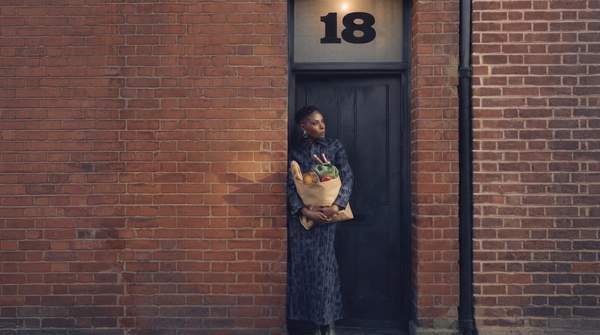
Diverse individuals interacting with AI-curated content, illustrating the subtle influence of algorithms on perception and daily life.

Last year, over 60% of online content consumed by the average person was either generated or heavily curated by AI, often without their explicit knowledge. This pervasive integration subtly guides daily interactions, shaping narratives and perceptions on an unprecedented scale. AI, designed to enhance human experience, inadvertently crafts a more mediated and potentially isolating cultural landscape. This tension emerges as algorithms prioritize engagement, often at the cost of shared communal understanding. Societies must therefore grapple with the trade-off between AI-driven convenience and the preservation of authentic human culture and individual agency. This negotiation defines our challenge in an AI-permeated world, where shared reality undergoes constant revision.

The Defining Shifts

1. Transformation of Creative Industries and Cultural Production

AI tools fundamentally alter the production of art, music, and literature. The Generative AI market in creative industries reached $4.06 billion in 2025, projected to grow to $5.38 billion in 2026, according to The Business Research Company. The expansion of the Generative AI market to $5.38 billion in 2026 signals a profound shift toward AI-assisted creative output, redefining available cultural products and their very genesis.

2. Significant Shifts in the Global Labor Market and Workforce Structure

AI drives substantial restructuring in the global labor market. By 2025, an estimated 85 million jobs were displaced, while 97 million new roles emerged, reports Allganize. The displacement of 85 million jobs and emergence of 97 million new roles by 2025 represents a fundamental economic and cultural reorientation of work, demanding profound adaptability from individuals and institutions alike.

3. Transformation of Work and Daily Life

AI will 'change not only the way we do things' but also how daily tasks are performed, states PMC NCBI. AI's impact on daily tasks extends from personal assistants to smart home automation, supported by broader labor market changes. AI's integration into daily processes redefines personal management and efficiency, potentially altering our fundamental relationship with routine.


4. Emergence of AI Ethics, Governance, and Policy Frameworks

'New principles of AI bioethics must be considered and developed,' asserts PMC NCBI. Allganize adds that 'AI adoption isn't just about technology—it's fundamentally about people, policies, and culture.' The insights from PMC NCBI and Allganize underscore a critical cultural imperative: establishing robust frameworks for responsible AI development and integration. Ethical considerations now stand as co-equal to technological advancement.

5. Evolution of Human Relationships and Social Interaction

AI will 'change...how we relate to others,' observes PMC NCBI. The profound cultural shift in how we relate to others includes interactions mediated by social algorithms, AI companions, and virtual environments. It signals a fundamental alteration in interpersonal dynamics, potentially reshaping the very nature of human connection itself.

6. Redefinition of Self-Perception and Human Knowledge

AI will 'change...what we know about ourselves,' states PMC NCBI. The change in what we know about ourselves marks a deep philosophical and cultural shift. Individuals increasingly turn to AI for information, self-assessment, and even identity formation. The curated realities and constant feedback from AI challenge traditional introspection, influencing how we perceive our place in the world.

7. Evolving Cultural Expectations and Desires for AI

Research on 'How Culture Shapes What People Want from AI' reveals a dynamic interplay between societal norms and AI adoption, reports Stanford HAI. The research on 'How Culture Shapes What People Want from AI' signifies a cultural shift in how societies perceive and desire AI, with user preferences and values actively shaping its trajectory. Different cultures will likely demand distinct functionalities and ethical considerations from AI, leading to a fragmented development landscape.

Before & After: A Cultural Snapshot

Cultural AspectBefore AI (Traditional)After AI (Current)
Content ConsumptionShared media experiences (TV, radio, newspapers) creating common cultural touchpoints.Algorithmic curation leads to fragmented, personalized content bubbles; reduced shared reality.
Work SkillsEmphasis on routine, manual, or specialized cognitive tasks; human oversight for complex decisions.Automation of routine tasks; demand for AI-literacy, critical thinking, and human-AI collaboration for complex problem-solving.
Social InteractionPrimarily face-to-face or via traditional telecommunication; spontaneous encounters.Mediated through platforms optimized by AI; emergence of AI companions and virtual communities, altering the nature of connection.
Creative ProcessHuman intuition and skill as primary drivers; long gestation periods for creative works.AI-assisted generation of content, rapidly accelerating production; questions of authorship and originality arise.
Ethical ConsiderationsEstablished human-centric ethical frameworks for technology; clear lines of accountability.Urgent need for new bioethics and governance for autonomous systems; complex questions of bias, privacy, and control.

How Identified the Shifts

This analysis of AI's cultural influence integrates authoritative academic research with industry reports. We examined primary sources like PMC NCBI for philosophical implications and The Business Research Company for economic data. the methodology prioritized broad societal transformations over transient trends, cross-referencing insights from labor market shifts (Allganize) with human relationships (Stanford HAI). This holistic view confirms AI as a force redefining collective identity and individual agency, not merely a tool.

If societies fail to consciously balance AI's economic imperatives with the preservation of unmediated human experience, the cultural landscape will likely fragment further, challenging the very foundations of shared reality and individual agency.