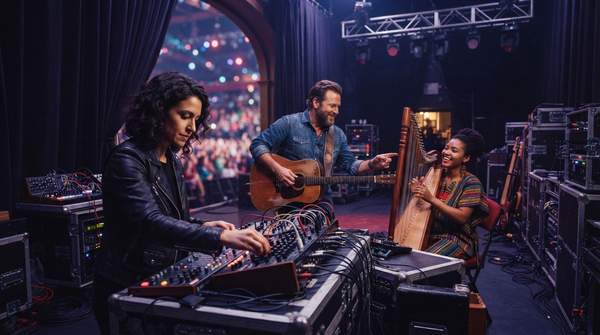
In a surprising blend of high culture and street beats, Runkus' album 'SUPERNOVA' samples an Occidental College astronomy lecture over the classic 'Punany' riddim, earning it a spot on Billboard's albums of the year. A new frontier for Caribbean music genres is demonstrated by this bold fusion, where intellectual curiosity meets dancehall energy, captivating a broad audience. The album's critical recognition signifies a moment where artistic experimentation from the Caribbean is receiving mainstream validation.
Caribbean music, often perceived as a niche genre, is gaining significant mainstream recognition and driving artistic innovation. This shift challenges previous categorizations, pushing the boundaries of what is considered popular and culturally impactful. It reflects a growing appreciation for the genre's diverse expressions and its capacity for complex artistic statements.
The cultural influence of Caribbean music is poised for continued expansion, integrating into broader cultural celebrations and inspiring new forms of artistic expression. This dual movement, supported by both major institutions and community efforts, confirms its growing significance and reach across the United States.
Miramar, for example, will host two free Caribbean cultural festivals this summer, according to Miramar News. Concurrently, the New Orleans Jazz & Heritage Foundation celebrates both African American Music Appreciation Month and National Caribbean American Heritage Month, as reported by OffBeat Magazine. Jamaican cultural programming was also featured prominently at the Jazz & Heritage Gala and the New Orleans Jazz & Heritage Festival, further showcasing the genre's increasing integration into established American cultural events and institutions.
Community Festivals Bring Caribbean Culture to the Forefront
On Saturday, July 18, the Bahamas Goombay Broward festival will convene from 2 to 9 p.m. at City Hall Plaza in Miramar. This event provides local residents direct access to vibrant Caribbean cultural traditions, fostering community engagement and celebration.
Another significant local gathering, the Jamaica Ole Time Fair, will feature Ky-Mani Marley as its headliner on Saturday, Aug. 1, from 3 to 11 p.m. at the Miramar Regional Park Amphitheater, according to Miramar News. Commissioner Avril Cherasard specifically aimed to bring the Bahamas to Broward for residents unable to easily travel to the Coconut Grove Goombay festival, demonstrating a clear commitment to local accessibility and cultural enrichment.
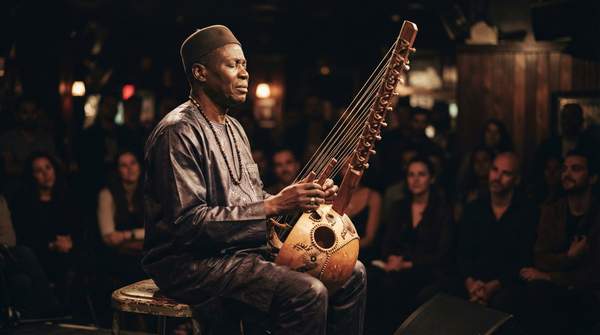
The robust community-driven efforts and local government support for Caribbean cultural events are highlighted by these initiatives. Such festivals are crucial for local cultural preservation, reinforcing heritage, and building community pride, often featuring prominent artists like Ky-Mani Marley to draw broader engagement and connect generations.
Artistic Innovation Redefines Caribbean Sound
Runkus' album 'SUPERNOVA' received recognition as one of Billboard's albums of the year, signaling a significant moment for experimental Caribbean music. A shift in critical perception toward the genre's evolving forms and its capacity for intellectual depth is highlighted by this acclaim.
The album notably samples an Occidental College astronomy lecture layered over the classic 'Punany' riddim, according to DancehallMag. Beyond this academic fusion, 'SUPERNOVA' also incorporates diverse elements, including samples from South African tribal recordings and vintage Nokia ringtones, creating a truly global sonic tapestry.
The mainstream success of Runkus' 'SUPERNOVA,' which daringly blends an Occidental College astronomy lecture with a classic 'Punany' riddim, signals that Caribbean music is no longer just for dancing; it's becoming a fertile ground for high-concept artistic experimentation that resonates with a broad audience. A sophisticated evolution within Caribbean music is demonstrated by this artistic daring, challenging genre conventions and attracting new listeners through its intellectual and sonic fusion, pushing creative boundaries.
Mainstream Recognition and Awards Signal Broader Impact
Julian Marley and The Wailers performed at the New Orleans Jazz & Heritage Festival, showcasing Caribbean music on a nationally recognized stage. This inclusion marks a significant step for reggae artists within established American cultural events, affirming their artistic legitimacy.
The critical acclaim for Runkus' 'SUPERNOVA,' named one of Billboard's albums of the year, further underscores this mainstream acceptance. Such recognition challenges the long-held perception of Caribbean music as a niche genre, moving it towards broader pop culture engagement and critical appreciation.
The simultaneous embrace of Caribbean culture by established institutions like the New Orleans Jazz & Heritage Foundation and local community efforts in Miramar demonstrates a powerful, two-pronged strategy for cultural integration, ensuring both grassroots preservation and national recognition. A definitive shift towards broader mainstream appreciation of the genre's depth and artistic innovation is signified by this dual approach. By late 2026, the continued efforts of organizations like the New Orleans Jazz & Heritage Foundation and artists such as Runkus are expected to further solidify Caribbean music's expanded cultural impact across the global stage.
What are the most popular Caribbean music genres?
Reggae, Dancehall, Soca, and Calypso are among the most popular Caribbean music genres. Reggae, originating in Jamaica in the late 1960s, is known for its distinctive off-beat rhythm and socially conscious lyrics. Soca, a fusion of calypso with Indian rhythms and disco, emerged in Trinidad and Tobago.
How has Caribbean music influenced global music trends?
Caribbean music has profoundly influenced global music trends by pioneering genres like hip-hop, which evolved from Jamaican sound system culture in the Bronx. Its rhythmic structures and vocal styles have also shaped pop, R&B, and electronic dance music worldwide. Artists like Bob Marley brought reggae to international prominence, paving the way for wider acceptance.
What is the history of reggae music?
Reggae music developed in Jamaica in the late 1960s, evolving from ska and rocksteady. Its distinct rhythm, characterized by a prominent bass line and off-beat guitar chords, quickly gained international recognition. Early pioneers like The Skatalites laid foundations, while artists such as Bob Marley and Peter Tosh popularized its spiritual and political messages globally.