In Libya, over 5,000 audio recordings of history were digitized to safeguard cultural heritage, according to UNESCO. The digitization of over 5,000 audio recordings in Libya and 19,500 bibliographic books and 2,000 Ola leaf manuscripts in Sri Lanka reflects a critical global effort to preserve invaluable historical records from potential loss, ensuring that future generations can access and learn from these foundational narratives. Similarly, in Sri Lanka, 19,500 bibliographic books and 2,000 Ola leaf manuscripts were successfully digitized, securing a wealth of historical and cultural information for long-term accessibility. The digitization efforts in Libya and Sri Lanka underscore the ethical imperative of digital cultural heritage preservation, emphasizing the profound impact technology holds for safeguarding at-risk assets by 2026.
Digitalization offers powerful tools for preserving and sharing cultural heritage, yet without robust ethical frameworks and community-led governance, it risks perpetuating historical inequities or creating new forms of exclusion. The push for broad accessibility, while often well-intentioned, can clash with the imperative to protect sensitive cultural assets from misinterpretation, commercial exploitation, or unauthorized alteration. This inherent tension defines the complex landscape of contemporary digital preservation.
The enduring value and legitimacy of digital cultural heritage will increasingly depend on a proactive commitment to ethical stewardship and inclusive participation, rather than solely on technological capability. This demands a nuanced approach that balances open access with the protection of community rights and cultural sensitivities, ensuring that digitalization serves as a tool for empowerment rather than a vector for further marginalization.
Global Reach and Innovative Tools
The Keepers Registry, relaunched under the ISSN International Centre in 2019, has aggregated preservation data from 20 archiving agencies across 10 countries, according to UNESCO. The Keepers Registry exemplifies the global infrastructure developing to ensure the longevity of digital cultural assets. Beyond institutional aggregation, practical digitization efforts are also advancing community-led preservation: the Maori Digital Archive in New Zealand and the Smithsonian’s National Museum of the American Indian in the United States have successfully collected and digitized historical photographs, audio recordings, and written materials, according to nimacorporation. The Maori Digital Archive and the Smithsonian’s National Museum of the American Indian projects demonstrate a tangible commitment to empowering indigenous communities to control and share their own narratives.
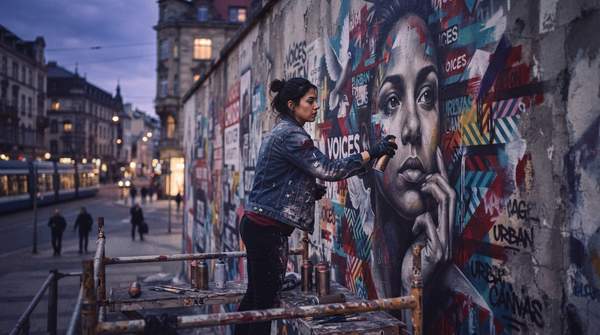
Technological advancements also extend into immersive experiences for cultural engagement. Immersive technologies like the metaverse offer innovative ways to preserve and promote cultural and heritage sites through virtual tours and reconstructions, according to Nature. Immersive technologies like the metaverse highlight a growing global commitment and diverse technological approaches to ensure cultural memory endures and is accessible. The global reach of digital preservation efforts demonstrates a collective understanding that cultural heritage transcends national borders and requires coordinated, multi-faceted preservation strategies, moving beyond simple archival to dynamic engagement.
The integration of diverse digital tools, from global registries to virtual reality platforms, signifies a maturation in the field of cultural heritage preservation. It suggests a movement towards not only safeguarding artifacts but also actively engaging wider audiences and fostering deeper understanding of diverse cultural histories. This broad application of technology underscores the potential to make heritage more resilient and relevant in the digital age, provided ethical guidelines are maintained.
Navigating Ethical Complexities and Vulnerabilities
Colombia has implemented public policy around 'sensitive heritage,' which includes sites known of but not open to visits, accessible only through mediation and strict ethical protocols, according to the International Council of Museums. Colombia's public policy around 'sensitive heritage' directly challenges the common assumption that digitalization's primary benefit is always democratizing access, revealing that ethical preservation sometimes necessitates less access. Colombia's policy to restrict access to certain digital representations of heritage highlights a crucial ethical boundary, prioritizing protection over universal availability.
Beyond access, the long-term integrity of digital assets presents another significant challenge. Format migration involves moving files stored in vulnerable or proprietary formats into stable, widely supported formats before the original ones become unreadable, according to libnova. Continuous technical maintenance, such as format migration, is essential for sustained digital preservation and often overlooked in initial digitization efforts. The push for 'democratized access' in digital heritage, while well-intentioned, risks undermining the very ethical principles it seeks to uphold; Colombia's 'sensitive heritage' policy shows that true preservation sometimes means restricting access, not expanding it, forcing a re-evaluation of what 'access' truly means. While technology provides solutions, the ethical imperative demands proactive policies and technical foresight to protect sensitive heritage and ensure long-term accessibility, acknowledging the inherent vulnerabilities of digital formats.
The interplay between technical obsolescence and ethical governance forms the bedrock of sustainable digital heritage. Ignoring the need for continuous format migration risks rendering vast digital archives inaccessible, even if initially created with the best intentions. This dual challenge requires a sophisticated understanding of both technological trends and community-specific ethical demands, ensuring that digital preservation efforts are comprehensive and ethically sound.preservation serves the long-term interests of the heritage it seeks to protect.
Empowering Local Stewardship
IFAP organized 11 events in Libya, including workshops and symposiums on Preservation, Access and Digitization of Audiovisual Documents, according to UNESCO. The 11 events organized by IFAP in Libya, including workshops and symposiums on Preservation, Access and Digitization of Audiovisual Documents, are crucial for ensuring that digital preservation efforts are sustainable and locally driven. Training local professionals in Libya underscores the understanding that technology alone is insufficient; human infrastructure and expertise are paramount for sustained impact.
Further emphasizing this point, six training workshops were organized in Sri Lanka for building the capacity of museum staff, university students, volunteers, and data entry professionals, according to UNESCO. Six training workshops organized in Sri Lanka equip local communities with the skills necessary to manage and maintain their own digital heritage initiatives, fostering a sense of ownership and long-term commitment. Companies and governments investing in digital heritage initiatives are missing the point if they prioritize technical solutions over local capacity building; the sustained success seen in Libya and Sri Lanka proves that empowering local communities with training and workshops is the true bottleneck.
Sustainable digital heritage relies not just on technology, but on cultivating local expertise and fostering community ownership over their cultural narratives. Without robust local capacity, digital projects risk becoming ephemeral, dependent on external resources that may not endure. The emphasis on training ensures that the knowledge and skills required for digital preservation are embedded within the communities themselves, creating a resilient framework for cultural safeguarding.
The Future of Ethical Digital Heritage
The 50th Anniversary Conference of the ISSN International Centre is scheduled for October 9, 2025, according to UNESCO. The 50th Anniversary Conference of the ISSN International Centre underscores the persistent need for global bodies to address the evolving ethical imperative in digital cultural heritage preservation, particularly as new challenges emerge by 2026. The scheduled 50th Anniversary Conference of the ISSN International Centre signifies that digital heritage preservation is a continuous, evolving endeavor requiring sustained global effort, extending far beyond the initial digitization phase.
The long-term viability of digital cultural heritage isn't just about initial scanning or virtual tours, but about continuous, often invisible, technical work like format migration and international data aggregation, as evidenced by the Keepers Registry and libnova’s insights, suggesting a hidden cost and complexity often overlooked. These ongoing efforts require sustained funding, policy adaptation, and collaborative research to address the challenges of technological obsolescence and data integrity. The future trajectory of digital heritage preservation will be defined by its ability to adapt to new technologies while upholding stringent ethical standards.
Ultimately, the ethical imperative of digital cultural heritage preservation demands a shift from a technology-centric approach to one that is community-led and ethically informed. By 2026, organizations like the ISSN International Centre and national cultural bodies will need to redouble their efforts in fostering local capacity and implementing nuanced access policies, ensuring that digital heritage serves as a bridge to understanding rather than a source of further division.


