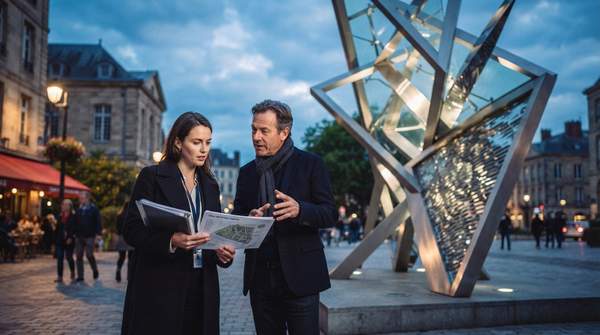
Alexander Calder's 'La Grande Vitesse' in Grand Rapids, Michigan, didn't just add a sculpture; it became a symbol of the city's downtown revitalization. Funded by the National Endowment for the Arts, the monumental red stabile, installed in 1969, sparked a national movement for public art as a catalyst for urban renewal. Its presence redefined Grand Rapids' identity, proving art's tangible impact on civic pride and economic activity.
Public art is widely lauded for its role in community building and economic uplift, but its deeper aesthetic impacts and its entanglement with neoliberal urban planning often go unexamined.
As cities increasingly turn to public art for revitalization, there's a growing risk that its complex social and political dimensions will be overshadowed by economic metrics. This prioritization potentially dilutes art's genuine aesthetic and transformative potential, reducing it to a tool for superficial urban improvements.
The National Endowment for the Arts (NEA) strategically championed public art as a tool for urban renewal from its inception. Its early funding for projects like Alexander Calder's 'La Grande Vitesse' in Grand Rapids, Michigan, as documented by Arts, established a powerful precedent. This institutional backing solidified public art's role as a visible catalyst, shaping national policy and urban development paradigms.
Art as a Catalyst for Community and Healing
In 2005, a performance of Samuel Beckett’s 'Waiting for Godot' in New Orleans neighborhoods, devastated by Hurricane Katrina, served as a source of community healing. The performance, supported by the nonprofit Creative Time, highlighted art's capacity to address collective trauma, according to Arts. Such projects prove public art helps communities process shared experiences and foster resilience.
Murals are often created through extensive community engagement, involving citizens, entrepreneurs, and artists in co-creation, according to urbact. This collaborative process allows art to reflect local narratives and build a collective identity. The participatory nature of these projects can strengthen social bonds, making art a powerful tool for community cohesion, especially during significant urban changes.
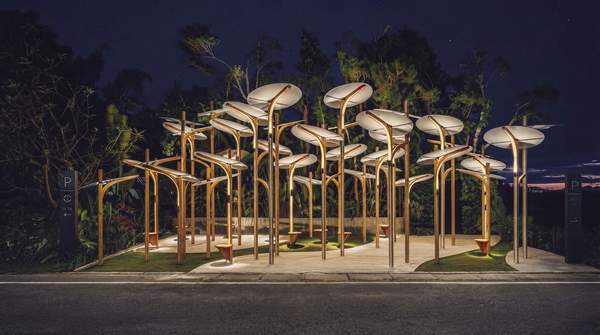
The Institutional and Economic Drivers of Public Art
In Los Pepines, a project aimed to strengthen the cultural sector and promote the cultural reoccupation of public spaces, according to obs.agenda21culture.net. The Los Pepines project reveals public art's strategic integration into urban planning, moving beyond mere beautification. The municipal government coordinated a management agreement with the Eduardo León Jiménez Cultural Centre and the Council for Development to revive these public spaces.
Specific objectives of these projects also included improving access to solidarity funding for creative industries and implementing a regional marketing plan for urban tourism in Santiago, as detailed by obs.agenda21culture.net. The specific objectives confirm public art's increasing integration into strategic urban planning, driven by institutional partnerships and explicit economic development objectives, particularly tourism. The focus shifts from intrinsic artistic value to measurable economic outcomes.
Beyond the Canvas: Public Art's Complex Relationship to Power
Studies of culture and neoliberal urban planning have often acknowledged a straightforward role for artists in the changing urban landscape. The acknowledged straightforward role often disregards art's complex relationship to power and resistance, according to Forarthistory Org Uk. The simplification of art's role ignores the nuanced ways art can be co-opted or instrumentalized within broader development agendas.
Furthermore, the actual aesthetic practices and their effects on the public’s perceptual, physical, and political encounters with urban space have often been overlooked in studies of art and neoliberal urban planning, as noted by Forarthistory Org Uk. The prevailing narrative of public art as purely beneficial often obscures its intricate ties to power structures. Art, therefore, can serve neoliberal urban agendas, prioritizing economic outcomes over genuine emancipatory potential or profound aesthetic engagement.
The Urgent Need for Critical Scrutiny
Rigorous research into art’s emancipatory properties in urban struggles for the ‘right to the city’ is urgently needed, according to Forarthistory Org Uk. This research should move beyond superficial economic metrics to examine how art truly impacts social justice and community empowerment. A critical re-evaluation is necessary to ensure public art genuinely serves the public's right to the city, rather than merely decorating development or masking deeper socio-economic issues.
Companies and municipal governments investing in public art for 'community healing' or 'cultural reoccupation' are often inadvertently, or even deliberately, leveraging these initiatives as a superficial aesthetic layer to mask deeper gentrification or economic development agendas. The leveraging of initiatives as a superficial aesthetic layer is suggested by the unexamined power dynamics highlighted by Forarthistory Org Uk. The rapid pivot from community-engaged art creation to developing 'mural walking routes for tourists' and regional marketing plans reveals public art's emancipatory potential is frequently commodified. The commodification trades genuine aesthetic impact for urban tourism revenue, a dynamic often overlooked by studies according to Forarthistory Org Uk.
How Public Art Transforms Spaces and Attracts Visitors
Public art's implementation often involves extensive community participation and structured planning. For instance, projects revitalized over 800 walls and public spaces for murals through local artist training and design evaluation, according to obs.agenda21culture.net. This collaborative approach ensures local input shapes artistic output, fostering a sense of ownership and reflecting local narratives. Concurrently, public art significantly enhances urban tourism by creating unique cultural attractions. The Street Art Foundation, for example, develops dedicated mural walking routes for tourists, transforming urban landscapes into open-air galleries. These routes draw visitors and generate economic activity, but also raise questions about the commodification of local culture for external consumption, potentially prioritizing visitor experience over genuine community needs.
The Enduring Role and Evolving Challenges of Public Art
If urban planners and cultural institutions prioritize rigorous, critical inquiry into public art's social and political dimensions over purely economic metrics, its emancipatory potential for genuine community empowerment appears more likely to be realized in the coming years.