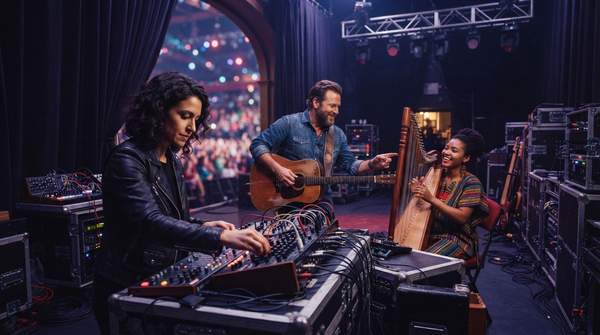
Crossover hits are surging in 2026, with artists increasingly blurring genre lines to create music that defies traditional classification, according to hitsongsdeconstructed. While musical fusion has been a constant throughout history, from early jazz to 1960s folk-rock, the current era reveals an unprecedented, deliberate blurring of genre lines. This challenges the very notion of distinct musical categories, moving beyond mere experimentation into strategic artistic choice. The future of popular music appears increasingly fluid, unconstrained by traditional boundaries, signaling a permanent shift in how music is created, consumed, and categorized.
What is Genre Blending, Anyway?
Queen's 'Bohemian Rhapsody' offers a historical example of musical styles fused into one composition, according to the BBC. This six-minute epic seamlessly navigates through ballad, opera, and hard rock sections, showcasing intricate genre blending. It stands as a timeless testament to combining disparate musical elements into a cohesive, groundbreaking work that transcended its era, proving that audacious fusion can define an artistic legacy.
The Creative Engine: Why Artists Blend Genres
Artists in 2026 intentionally break free from conventional molds. Blending genres creates innovative tracks that redefine music composition and production, notes hitsongsdeconstructed. This pursuit of novel sonic experiences challenges artists to think differently about how elements interact, preventing artistic stagnation and ensuring creative relevance. Artists who resist this blending risk artistic stagnation and commercial irrelevance in a market increasingly rewarding innovation through stylistic defiance.
Beyond the Studio: Audience Reception and Market Impact
The growing commercial success of genre-fluid tracks signals a significant shift in listener preferences towards diverse, unconventional sounds. Crossover hits validate the artistic strategy of 'redefining usual rules of music composition and production,' demonstrating that audiences actively embrace and reward music defying easy categorization. Listeners are no longer confined by genre labels, instead seeking music that evokes feeling or mood, creating a more open and exciting listening experience.

More Than Just Music: Cultural Significance
The continuous evolution of musical genres through blending enriches the artistic landscape and mirrors broader cultural shifts. The shift from historical, occasional genre fusion (like Queen's 'Bohemian Rhapsody' as noted by BBC) to a deliberate, widespread strategy of 'redefining usual rules' (hitsongsdeconstructed) indicates that traditional music industry categorization is rapidly becoming an outdated framework for both creation and consumption. This cultural fluidity allows music to reflect and shape our increasingly interconnected world, offering a sonic tapestry of our shared human experience.
Common Questions About Musical Fusion
What are some examples of genre-blending in music?
Contemporary examples include Lil Nas X, who fused country and hip-hop in "Old Town Road," and Rosalía, who blends traditional flamenco with reggaeton and electronic elements. Hyperpop also mixes pop, electronic, and punk into a distinct, high-energy sound that challenges typical genre boxes.
How has technology influenced genre-blending?
Digital audio workstations (DAWs) and vast online sample libraries democratize music production, allowing artists to easily experiment with sounds from any genre. Streaming platforms expose listeners to a wider array of global music, fostering an open-minded approach to genre fusion and creative exploration.
What is the future of genre-blending in music?
The future will lean towards even greater fluidity, with artificial intelligence potentially generating novel genre combinations and virtual reality concerts offering immersive, genre-agnostic experiences. This will likely further diminish rigid categories, pushing artists and listeners to embrace music purely on its artistic merit and emotional resonance.
The Future is Fluid: Embracing Musical Evolution
Genre blending underscores music's inherent adaptability and endless capacity for reinvention. This deliberate fusion is not a fleeting trend but a fundamental reorientation of musical identity, reflecting a deeper cultural shift. By Q4 2026, major labels like Universal Music Group will likely streamline A&R divisions, prioritizing artists who demonstrate genre-defying creativity, recognizing that innovation through stylistic defiance drives both commercial success and artistic vitality.