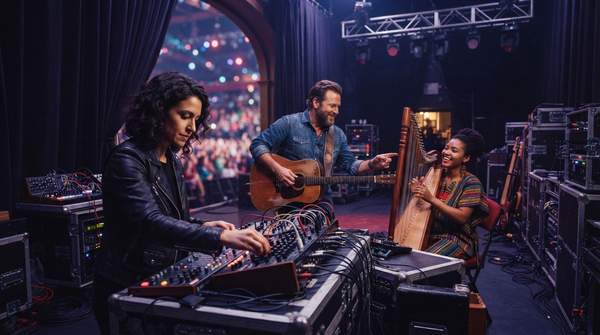
In hospital rooms across the globe, the subtle hum of ambient music is proving more effective than some medications at calming anxious patients. This quiet presence offers a non-pharmacological pathway to comfort and stress reduction in high-stress medical environments.
Ambient music was conceived as a genre to be 'actively ignored,' but it has become a powerful, actively sought-out tool for health and focus. This re-evaluation of its role renders the perception of ambient music as mere background noise outdated. Its functional, beneficial soundscape will continue to expand into diverse, non-traditional applications, a trend evident in the evolution of ambient and synth-wave subgenres in 2026.
More Than Just Background Noise: Defining Ambient Music
In 1978, Brian Eno coined "ambient music" with Ambient 1: Music for Airports. Eno designed it to induce calm and facilitate thought, not demand active listening, according to Wikipedia. Its core characteristics—sustained tones, lack of dominant rhythm, and emphasis on texture—create an enveloping sound environment meant to be "actively ignored." This allows listeners to focus or relax, forming a non-intrusive sonic backdrop.
From Art Galleries to Digital Streams: The Evolution of Ambient Soundscapes
Ambient music emerged from experimental art, often featured in installations and multimedia projects. This artistic genesis fostered the genre's adaptability and subgenre expansion. It absorbed influences from electronic music, minimalism, and new-age, spawning diverse subgenres from drone to dark ambient. By the mid-2020s, its ubiquity on digital streaming platforms solidified its shift from niche art spaces to everyday listening, proving its profound cultural integration.
Synth-wave and Beyond: How Ambient Principles Shape Modern Genres
Ambient music's atmospheric and immersive qualities became foundational for modern electronic genres, extending its stylistic legacy. Synth-wave, despite its driving rhythms and nostalgic aesthetic, heavily draws from these principles. Artists craft sonic environments with sustained synth pads and reverb-drenched sounds to evoke retro-futurism or nostalgia. This emphasis on immersive atmosphere, where sound actively shapes feeling, also influences genres like chillwave and downtempo, which incorporate ambient textures for relaxed or reflective moods. Ambient principles thus dictate a new paradigm for contemporary sound design, prioritizing emotional resonance over mere melody.

The Unseen Power: Ambient Music's Therapeutic and Functional Impact
Beyond entertainment, ambient music offers tangible therapeutic benefits. A study in the Journal of Advanced Nursing found it reduces anxiety in patients undergoing medical procedures. This clinical validation means healthcare providers who overlook ambient music miss a potent, non-pharmacological option for patient anxiety management. Its demonstrable efficacy in medical settings suggests sensory design, not just pharmacology, must become a core component of patient care, leading to more holistic and less invasive treatment protocols. Ambient music thus redefines itself from background noise to an active therapeutic agent.
Common Questions About Ambient and Its Offshoots
How did synth-wave evolve from earlier electronic music?
Synth-wave evolved primarily from 1980s film scores, video game soundtracks, and electronic music genres like Italo disco. Synth-wave shares ambient music's emphasis on atmosphere but often incorporates strong rhythmic elements and nostalgic melodic hooks. It draws from the distinct sonic palette of 80s synthesizers to create its retro-futuristic sound.
What are some popular ambient and synth-wave artists?
In 2026, artists like Hania Rani and Ólafur Arnalds continue to be prominent in the ambient scene, creating contemplative soundscapes. For synth-wave, artists such as Perturbator and Carpenter Brut remain influential, known for their darker, driving rhythms and cinematic aesthetics, while newer talents like Lorn explore more atmospheric, melancholic synth-wave variations.
What is the difference between ambient and chillwave?
Ambient music typically focuses on creating an immersive atmosphere without strong rhythmic or melodic structures, often intended for passive listening. Chillwave, conversely, emerged in the late 2000s and features hazy, lo-fi aesthetics, often incorporating pop melodies, laid-back beats, and vocals, creating a nostalgic and relaxed vibe that is more actively engaging than traditional ambient music.
The Quiet Revolution: Why Ambient Music's Influence Will Only Grow
As societal emphasis on mental well-being grows, demand for non-pharmacological interventions will likely increase. This positions ambient music, with its documented efficacy, as a crucial component in future wellness and therapeutic protocols, influencing how sound is designed for human benefit. Companies like Endel already exemplify this trajectory by creating personalized soundscapes for specific functional outcomes. By 2027, the market for functional music, including ambient applications, appears poised for continued growth, driven by both consumer demand and clinical adoption.