Thursday, September 3, 2026
The Cultural Review
CultureArtMediaBooks
The Cultural Review

Exploring the Intersection of Art, Culture, and Ideas

The Cultural Review offers insightful analysis and commentary on art, media, books, fashion, music, and trends shaping contemporary culture. We provide a platform for thought-provoking discussions and diverse perspectives, fostering a deeper understanding of the world around us.

Sections

  • Culture
  • Art
  • Media
  • Books
  • Fashion
  • Music
  • Trends

Writers

Meet our writers →

Trending Topics

Contemporary ArtCultural ReviewCommunityLiteratureContemporary ArtInterior Design

About

  • Contact
  • Privacy Policy
  • Terms of Service

© 2026 The Cultural Review. All rights reserved.

  1. Home
  2. /Media
  3. /Film & Digital Media Programs: Cost vs. Value
Media

Film & Digital Media Programs: Cost vs. Value

The first-year tuition for USC's Animation & Digital Arts MFA program alone costs $60,478—a sum that could fund an entire independent short film, revealing a stark financial reality for aspiring artis

AS
Andre Silva

September 3, 2026 · 7 min read

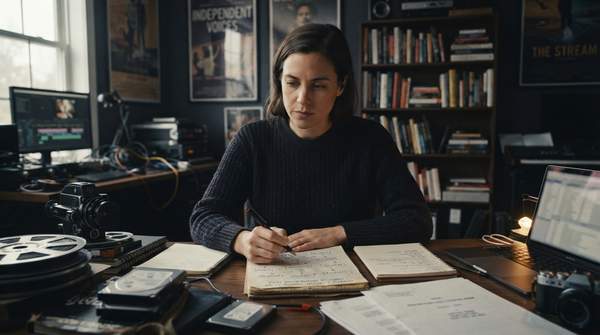
Filmmaker at a crossroads between a prestigious university and an independent studio, representing the cost vs. value decision in film education.

The first-year tuition for USC's Animation & Digital Arts MFA program alone costs $60,478—a sum that could fund an entire independent short film, revealing a stark financial reality for aspiring artists. This significant barrier, coupled with the Film & Television Production MFA program's $49,495 first-year cost, positions elite institutions as financially demanding gateways, according to USC Cinematic Arts. Elite film and digital media programs command astronomical tuition, yet their high cost doesn't automatically equate to the best educational or career path for every creative. This tension forces artists to a critical decision point: pursue brand-name institutions and risk debt, or explore equally effective, more affordable alternatives.

Breaking Down the Tuition Bill

  • $9,868 — Tuition for one 4-unit course at USC Cinematic Arts, according to USC Cinematic Arts.
  • $19,736 — Tuition for two 4-unit courses at USC Cinematic Arts.
  • $29,604 — Tuition for three 4-unit courses at USC Cinematic Arts.

These per-course breakdowns reveal how quickly tuition accumulates, making even partial enrollment a significant financial commitment. USC's modular, per-unit pricing, while offering apparent flexibility, locks students into an incredibly expensive system. This makes it financially prohibitive to explore alternative, potentially better-fitting, educational paths without incurring massive debt.

Beyond Prestige: The Value of Fit

No single best film school exists for every student; the optimal program aligns with a student's working style, storytelling interests, and collaborative appetite, states Socapa. This demands prioritizing personal alignment and specific career aspirations over a school's general reputation. The reality of no "best" school directly contradicts the premium pricing of elite institutions like USC, suggesting many students invest heavily in a brand, not a tailored educational experience crucial for artistic development.

1. USC School of Cinematic Arts

Best for: Creatives seeking major industry proximity, extensive alumni networks, and a deep range of production disciplines within a highly visible, top-tier program.


Description: USC School of Cinematic Arts, known for comprehensive offerings and strong industry ties, provides a robust environment for filmmakers and digital artists. Its programs—animation, film/TV production, and producing—attract students prioritizing institutional prestige and network access.

Strengths: Major industry proximity; strong alumni reach; deep range of production disciplines; consistent visibility in film school rankings. | Limitations: Exorbitant tuition costs; potential for a standardized value proposition that may not align with all individual artistic needs. | Price: First-year MFA tuition: Animation & Digital Arts $60,478 (22 units); Film & Television Production $49,495 (18 units); Peter Stark Producing Program $65,726 (24 units). 2025-2026 tuition cost is $2624.00 per unit, with $2750 mandatory fees, according to USC Cinematic Arts and Filmschool.

2. City College of New York

Best for: New York residents and students prioritizing affordability in an MFA program, particularly those focused on cost-effective education.

Description: City College of New York offers an MFA program with significantly lower tuition for residents, providing an accessible path for advanced film studies within a major urban center.

Strengths: Highly affordable tuition for residents; urban setting provides cultural and networking opportunities. | Limitations: Potentially less global industry visibility compared to top-tier private institutions; specific program details are less extensive in available data. | Price: MFA program costs $305 per credit for residents and $602 per credit for nonresidents, according to The Hollywood Reporter.

3. NYU Tisch School of the Arts

Best for: Auteur-driven filmmakers and creatives who thrive in a bustling city environment, seeking a balance of narrative craft and experimental approaches.

Description: NYU Tisch is renowned for auteur-driven training and dynamic, city-scale production energy, balancing traditional narrative craft with innovative experimentation.

Strengths: Strong reputation for artistic freedom and experimentation; robust New York City production environment; diverse program offerings. | Limitations: High cost (implied by prestige) for which specific tuition figures are not provided in the evidence; highly competitive admission. | Price: Not specified in available data.

4. American Film Institute Conservatory

Best for: Students seeking an immersive, discipline-specific training experience within a professional conservatory model, focusing on practical craft.

Description: The AFI Conservatory offers a respected conservatory model, providing immersive, discipline-specific training in a professional environment, emphasizing hands-on learning and craft mastery.

Strengths: Immersive, discipline-specific training; strong focus on practical, professional skills; respected conservatory model. | Limitations: Highly specialized focus may not suit all creative interests; specific tuition figures are not provided in the evidence. | Price: Not specified in available data.

5. Chapman University Dodge College

Best for: Creatives who prefer a production-forward environment with impressive facilities and value consistent visibility in film school rankings.

Description: Chapman University's Dodge College features a production-forward environment with impressive facilities and consistent film-school rankings, attracting students focused on hands-on production.

Strengths: Production-focused curriculum; impressive facilities; consistent high rankings. | Limitations: Specific tuition figures are not provided in the evidence; geographic location may offer different industry exposure compared to major hubs. | Price: Not specified in available data.

6. ArtCenter College of Design

Best for: Students with clear career paths in directing, cinematography, or editing, seeking specialized training within these specific film tracks.

Description: ArtCenter College of Design's film program offers three distinct tracks—directing, cinematography, and editing—providing focused, specialized education for students with targeted career aspirations.

Strengths: Specialized program tracks; strong design and visual arts foundation. | Limitations: Specific tuition figures are not provided in the evidence; narrower focus might limit broader film education. | Price: Not specified in available data.

7. Pace University

Best for: Undergraduate students seeking flexibility in their filmmaking education, with options for both Bachelor of Science and Bachelor of Arts degrees.

Description: Pace University offers both Bachelor of Science and Bachelor of Arts degrees in filmmaking, catering to students with different academic approaches and career orientations.

Strengths: Offers both BS and BA degrees, providing academic flexibility; urban campus location. | Limitations: Specific tuition figures are not provided in the evidence; less prominent in film school rankings compared to specialized institutions. | Price: Not specified in available data.

8. Columbia School of the Arts

Best for: Graduate students interested in a Film MFA program, particularly those seeking an academically rigorous environment in a major cultural center.

Description: Columbia School of the Arts offers a Film MFA Program, with tuition and fees listed for the 2026-2027 academic year, indicating a commitment to advanced film education within a prestigious university setting, according to Columbia School of the Arts.

Strengths: Prestigious university affiliation; strong academic environment in New York City. | Limitations: Specific tuition figures and detailed program offerings are not provided in the evidence, making a full comparison difficult. | Price: Specific figures for tuition and fees for the academic year 2026-2027 are not provided in the evidence.

Understanding Hidden Fees and Commitments

Beyond core tuition, seemingly minor deposits represent non-recoverable financial commitments, adding to the total cost of attendance even before a program begins. For instance, the non-refundable Commitment Deposit for the SCA Summer Program is $750, due within 7 days of acceptance, according to USC Cinematic Arts.

Program/SchoolDeposit TypeAmountRefundable?
USC SCA Summer ProgramCommitment Deposit$750No

This upfront cost, though small compared to overall tuition, can still barrier aspiring creatives, revealing the layered financial demands of elite programs.

The True Cost of a Single Course

The tuition for one 8-unit course at USC Cinematic Arts is $19,736—a sum rivaling the budget for a significant independent project, according to USC Cinematic Arts. This granular pricing structure forces aspiring creatives to weigh academic experience against direct investment in their craft. The $9,868 cost of a single 4-unit course means students pay the equivalent of an independent project budget for one academic experience, raising questions about the opportunity cost of traditional education versus direct creative investment. This per-unit cost effectively forces creatives to choose: accumulate crippling debt for a prestigious name, or forgo formal education to directly fund their own projects. Such a dilemma stifles diverse artistic voices before they even begin, demanding a critical assessment of whether a prestigious name truly aligns with individual artistic and career trajectories, especially as USC maintains this tuition structure through 2026.

Frequently Asked Questions about Film Program Costs

What are the top digital media degrees?

Top digital media degrees often encompass fields beyond traditional film, including game design, virtual reality (VR) and augmented reality (AR) development, interactive storytelling, and transmedia production. These programs focus on emerging technologies and platforms, preparing students for roles in interactive entertainment, experience design, and digital content creation across various industries.

What is the best film school for animation?

While this article focuses on broader film and digital media programs, the best film school for animation often features specialized curricula in 2D and 3D animation, stop-motion, character design, and visual effects. Programs at institutions like CalArts, Ringling College of Art and Design, or Sheridan College are frequently cited for their strong animation departments and industry connections, offering focused training often distinct from live-action film production.

How to choose a digital media program?

Choosing a digital media program involves evaluating several factors beyond tuition: the program's specific curriculum focus (e.g. game development, interactive design, visual effects), faculty's industry experience, available facilities and technology, and the strength of alumni networks in your desired field. Prospective students should also consider the program's approach to collaborative projects and internship opportunities to ensure alignment with their working style and career aspirations.

Related Coverage from Media

  • Venice Film Festival 2026: A-List Premieres, Diversity Criticism

Tags

Film SchoolsDigital MediaArts EducationTuition CostsCareer PathsUsc Cinematic ArtsMfa Programs
AS

Andre Silva

Music & Media Writer

Andre Silva is a Music & Media Writer at The Cultural Review, where he covers contemporary music, digital media, and cultural trends. He approaches his writing with a dedication to providing insightful analysis and exploring the broader cultural impact of sound and media.

More from Media

A young person browsing vinyl records in a modern, warmly lit record store, highlighting the resurgence of physical media.

What Is the Resurgence of Physical Media and Why Does It Matter in 2026?

In an era dominated by streaming, US vinyl revenue surpassed $1 billion in 2025, with approximately 47 million records sold, marking the 19th consecutive year of growth, according to Bloomberg .

Claire Donovan· Sep 2
The newly opened $73 million film and media training facility, The Boiler Shop, at Albuquerque's historic Rail Yards, showcasing a blend of industrial and modern architecture.

Albuquerque Opens $73M Film and Media Training Facility

A $73 million film and media training facility, The Boiler Shop, grand opened at Albuquerque's historic Rail Yards.

Claire Donovan· Sep 2
A symbolic representation of numerous digital documentaries drowning in a sea of content, with one film attempting to emerge.

Digital Documentaries: The Challenge of Societal Impact

In 2023, over 10,000 new social impact documentaries flooded YouTube and Vimeo, a 300% surge from a decade prior.

Claire Donovan· Sep 2
Venice Film Festival red carpet with a sparse crowd, symbolizing the criticism regarding lack of diversity in the 2026 lineup.

Venice Film Festival 2026: A-List Premieres, Diversity Criticism

Despite a record 4,500 film entries, the 83rd Venice Film Festival has opened to an 'almost complete absence of female directors' in its programming, according to Le Monde.

Andre Silva· Sep 1

Trending Now

1
The Multi-Platform Creative Presence Behind amirsaranga

The Multi-Platform Creative Presence Behind amirsaranga

Music· 16 views
2
A vibrant, monumental street art mural on a brick wall in a bustling city at dusk, with people admiring the colorful artwork under warm streetlights.

The History and Cultural Significance of Street Art and Graffiti: An Explainer

Art· 21 views
3
A young Gen Z individual thoughtfully examining a CD case in a modern record store, highlighting the resurgence of physical music media.

Why Are Young People Buying Physical Media in 2026?

Media· 20 views
4
A dynamic, futuristic concert scene with diverse people dancing under neon lights, symbolizing the global emergence of new music genres in 2026.

Top 7 Emerging Music Genres to Watch in 2026

Music· 19 views
5
A powerful street art mural showcasing social commentary and cultural expression, with a subtle Banksy-style figure.

Street art's social commentary and cultural expression

Art· 16 views
6
Hands of a designer meticulously stitching repurposed fabric, transforming old garments into new, stylish pieces in a bright, modern upcycling fashion studio.

What Is Upcycling in Fashion? A Guide to Sustainable Style

Fashion· 10 views