Literary salons succeeded not because talented people happened to gather, but because they operated as a functioning system with three interacting components: a host who convened and sustained the gathering, a deliberately mixed assembly of guests, and a structured framework of conversation. Understanding those mechanics — most visible in European salons from the 17th to the early 20th century — explains how private drawing rooms shaped the Enlightenment, literary Romanticism, and modernism, and why the same patterns remain recognizable in community-building today.
Introduction: The Enduring Legacy of Literary Salons
As Encyclopaedia Britannica defines them, a salon was a gathering of people, typically influential figures like artists, writers, or statesmen, held in a prominent person's home. Originating in Renaissance Italy and flourishing in 17th- and 18th-century France, these became influential hubs for intellectual discourse, as accounts of their history recount. What began as fashionable assemblages evolved into institutions with measurable cultural consequences: they incubated the Enlightenment, elevated new literary voices, and carried their format into the 20th century, where Gertrude Stein's small Parisian apartment drew the likes of Pablo Picasso, Ernest Hemingway, and F. Scott Fitzgerald to philosophize about modern art, politics, and literature.
Yet the salon's historical significance has itself been contested. A Stanford Humanities Center essay on eighteenth-century Parisian salons notes that a landmark study led historians to reevaluate the salons as a cultural institution and to study seriously the women who received writers in their homes — while cautioning, in the same author's argument, that treating salons purely as literary venues is misguided because they were "above all, the social spaces of elite leisure." The truth that emerges is layered: salons were leisure spaces that nonetheless generated real intellectual work.
The Salon as a System: Three Pillars of Intellectual Exchange
Breaking the salon into its parts shows why it functioned as an engine of ideas rather than a mere social occasion. The model below synthesizes descriptions across the salon's history — from Enlightenment Paris to the Blue Stockings of 1750s Britain and into the 20th century.
| Pillar | Function | Impact |
|---|---|---|
| The Salonnière (host) | Women of the bourgeois and noble classes hosted gatherings to educate themselves and wield social and political power; hosts were wealthy, well-connected, and had the time, space, and money to sustain the events. | Gave women intellectual agency beyond traditional boundaries; several salonnières became internationally famous. |
| The Habitués (guests) | Attendance was by invitation only, with letters of introduction required of unknown guests; some hosts separated guests by social rank, while others deliberately mixed classes, making salons a genuine mix of gender, social status, and talent. | Elevated the growing bourgeois class to the level of the nobility in the exchange of ideas. |
| The Framework (rules of discourse) | Structured gatherings within a shared private space, governed by an ethos of politesse — politeness — with intellectual debates, dramatic readings, and games rather than unformed chatter. | Created an even playing field of ideas; the private setting permitted discussion insulated from official interference. |
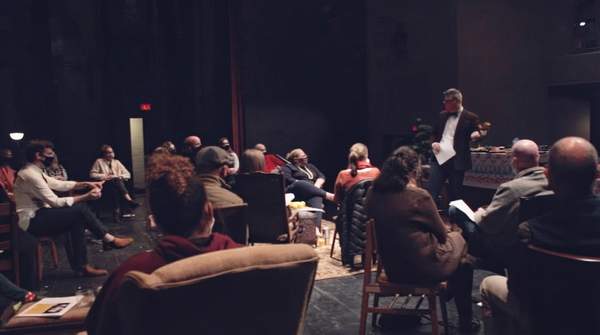
The pillars only produced results in combination. A host's curation meant nothing without the framework; the framework meant nothing without a diverse assembly to apply it to. That interplay, rather than any single element, is the salon's transferable design principle — and it is precisely what one can look for in contemporary communities: who convenes, who is in the room, and how conversation is governed.