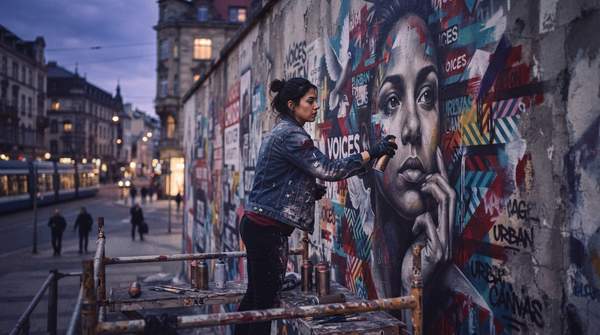
In communities where local cultural events thrive, residents consistently report significantly higher levels of belonging and mutual support, transforming public spaces into vibrant hubs of connection. These gatherings, often catalyzed by judicious local cultural events grants, serve as crucial anchors, preserving cultural identity and fostering a shared sense of purpose among diverse populations. The tangible benefits of such sustained engagement are becoming increasingly unmistakable, demonstrating their profound societal value.
Yet, local cultural events, despite their proven role as catalysts for social cohesion and individual well-being, frequently encounter public funding and policy frameworks that fail to recognize their fundamental, rather than merely peripheral, importance. This persistent oversight creates a discernible tension between observed community benefits and the official valuation of these vital initiatives.
Based on the compelling, demonstrated link between active cultural engagement and robust community health, neglecting these initiatives appears likely to lead to increased social fragmentation and a palpable reduction in collective well-being. Such neglect exposes a critical misalignment in how society presently invests in its own resilience and future stability.
The Indispensable Role of Cultural Engagement in Community Health
Community projects across Europe and North America demonstrate that fostering social cohesion through cultural means is not merely a pleasant amenity, but a foundational, strategic imperative for improving overall community health. Research published by pmc highlights that social cohesion may function as a mechanism for enhancing community well-being. This finding implies a direct, mechanistic link between how connected individuals feel within their community and their collective state of health and prosperity.
This connection extends beyond individual sentiment, profoundly influencing a community's collective capacity to address shared challenges and adapt to change. When residents feel more deeply connected through shared cultural experiences, they are demonstrably more likely to participate actively in civic life, support local initiatives, and contribute to collective problem-solving. Policymakers who view local cultural events as mere entertainment miss the profound link identified by pmc: these events are critical infrastructure that directly builds social cohesion, enhancing community well-being. This redefines cultural programming from a discretionary luxury to an essential component of robust civic life and societal architecture.