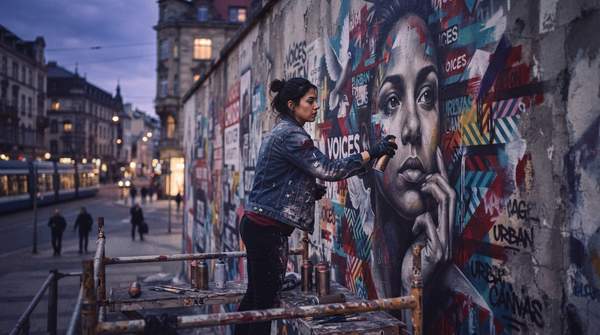
Street art and graffiti have undergone a profound transformation, evolving from unsanctioned acts of rebellion into recognized forms of cultural expression and powerful mediums for social commentary. What was once largely dismissed as vandalism has grown into a global phenomenon, embraced by cities, galleries, and art enthusiasts alike, as noted by the East End Arts Council. This evolution has reshaped urban landscapes into vibrant expressions of creativity, resistance, and storytelling, deeply rooted in social movements, cultural identity, and artistic innovation.
This journey from illicit tags to legitimate art reflects significant shifts in artistic style, intent, public perception, and institutional recognition over several decades. Ndung'u John Wanjiku, writing for Research Output Journals, highlights that street art, initially perceived as vandalism, has transitioned into a legitimate art movement encompassing a wide range of visual expressions in public spaces. This article traces this historical progression, examining how public perception and institutional recognition shifted, and analyzing the social impact of public art.
Early Roots: Graffiti as Rebellion and Identity
The origins of modern graffiti can be traced to the 1960s and 1970s, particularly in Western contexts, where young artists began "tagging" their names and creating intricate designs on subway cars and buildings. These early artists, often referred to as "writers," were driven by a desire to leave their mark on public spaces and amplify their voices in a rapidly urbanizing world, according to Nina Ryan of Sotheby's Institute of Art. This period saw graffiti become a cornerstone of urban identity, especially with the rise of hip-hop culture in the 1970s, providing a creative outlet for marginalized communities to express frustrations, aspirations, and cultural pride.
Initially, graffiti was largely associated with vandalism, prompting cities to launch aggressive anti-graffiti campaigns. Despite its outlaw status, the practice prioritized visibility and placement, with artists like Jean-Michel Basquiat contributing to its early elevation. The International Journal of Legal Science and Innovation notes that while writing names and creating artwork in public spaces has existed for thousands of years, the modern form of graffiti specifically centers on personal and individual identity.


