In a small Andean village, a Quechua association meticulously documents ancient weaving patterns. They race against time: younger generations migrate to cities, threatening centuries of textile knowledge. This Peruvian cooperative saw a 70% decline in active weavers under 30 between 2016 and 2026, according to the Andean Cultural Institute. To counter this, 'Threads of Time' launched a digital archive in 2022, documenting over 500 unique patterns and their historical significance, as detailed in its Annual Report. A digital initiative sparked a 15% increase in international interest and workshop bookings in 2022, reported by the Peruvian Ministry of Culture, directly addressing the decline.
Cultural associations strive to preserve heritage authentically, but they must increasingly adapt and promote it in ways that risk altering its original context or meaning. The long-term survival of unique cultural heritages appears to depend on innovative, community-led strategies, bridging tradition and contemporary engagement without compromising integrity. These local associations stand on the front lines, employing both traditional methods and modern tools to combat cultural erosion. Yet, the very tools designed to preserve endangered heritage—digital platforms and international promotion—often undermine its local roots, transforming it into a static archive or a spectacle rather than a dynamic, living practice.
What Are Cultural Associations and Why They Matter
Cultural associations are non-profit entities formed by communities or individuals to protect, study, and disseminate specific aspects of cultural heritage, as defined by the UNESCO Definition of Cultural Organizations. They form the backbone of heritage conservation, offering grassroots expertise and advocacy larger institutions often lack. Globally, over 80% of intangible cultural heritage safeguarding projects originate from local community-based organizations, according to the ICH NGO Forum Report from 2021. These groups act as intermediaries, translating local needs into actionable projects, states the International Council on Monuments and Sites (ICOMOS). Their localized approach ensures culturally sensitive, community-driven preservation, fostering ownership. Without them, much of the world's diverse cultural knowledge would rapidly decline.
The Dual Mandate: Preservation Versus Promotion
Strict preservation often limits access, conflicting with broad public engagement, notes the Journal of Cultural Heritage Studies. Promotional activities, while generating vital funds, risk commodifying or misrepresenting cultural practices, according to the Cultural Tourism Research Institute. A study of traditional music festivals found 90% increased public awareness, yet 30% of artists reported concerns about 'dilution' or 'performance for profit,' found by the Ethnomusicology Review.
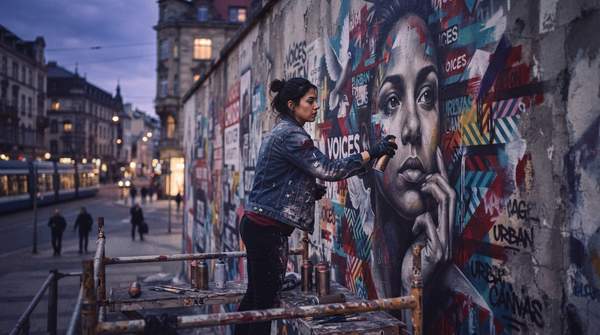
Organizations pushing for rapid digitization of intangible heritage, however well-intentioned, often create archives documenting the death of traditions rather than fostering their life within communities. This growing disconnect between digital representations and living practice is stark. Ireland's 'Silent Voices' project, for instance, kept ancient Gaelic storytelling traditions exclusively within community elders to maintain sacred context, foregoing wider promotion, as reported by the Irish Folklore Commission. This illustrates the difficult choices associations face when balancing accessibility with authenticity.
The global demand for 'authentic' cultural experiences, fueled by modern promotion, paradoxically forces local associations to compromise the very authenticity they seek to preserve. Vibrant traditions become curated performances for external consumption, rather than organic community expressions. While a leading heritage foundation champions digital platforms for global reach and funding, an ethnographic study of indigenous communities warns that digitizing sacred practices risks desacralization and misinterpretation by external audiences. This implies that 'saving' heritage through modern means can inadvertently strip it of its original meaning and context for its originating community.
Innovative Approaches Bridge the Gap
The 'Digital Nomads of Heritage' initiative trains indigenous youth in digital archiving and storytelling, empowering them to share their heritage on their own terms, supported by the Global Heritage Fund. This contrasts with traditional top-down methods, granting communities agency in their cultural representation. Such creative, community-centric strategies prove essential for making heritage relevant and accessible without sacrificing integrity.
Community-supported agriculture (CSA) models, adapted for cultural heritage, allow subscribers to fund traditional craftspeople directly, ensuring income and authentic production, according to the Slow Culture Movement. The 'Living Museums' concept, pioneered by African cultural associations, integrates heritage sites with active community life, allowing visitors to observe rather than merely consume, notes the African Heritage Trust. Gamification of historical narratives, like the 'Ancient Rome Reborn' app, has increased youth engagement by 40%, as reported by the European Cultural Heritage Alliance. These approaches show how associations can adapt without compromising their heritage's essence.
Why Investing in Cultural Associations Benefits Everyone
Cultural heritage tourism, often facilitated by local associations, contributes over $300 billion annually to the global economy, according to the World Tourism Organization. The economic impact extends beyond direct revenue, fostering local employment and infrastructure development. Supporting cultural associations is not mere nostalgia; it is an investment in economic development, social resilience, and a richer, more knowledgeable global society.
Communities with active cultural heritage programs report higher levels of social cohesion and civic engagement, published in the Journal of Community Development. Preserving diverse cultural knowledge, from traditional ecological practices to medicinal plant uses, offers valuable insights for contemporary challenges like climate change and public health, as highlighted by the Indigenous Knowledge Systems Journal. The 'Heritage for Peace' network, comprising various cultural associations, has successfully mediated conflicts by focusing on shared cultural values in post-conflict zones, states a UN Peacebuilding Commission Report. Broader benefits confirm their critical importance.
The Future of Our Shared Past
Digital transformation presents both a threat and an opportunity for cultural heritage, offering global reach and new preservation methods, yet risking misinformation and decontextualization, notes the Digital Heritage Lab. Without a radical shift empowering local communities to define and control their heritage narratives, associations risk becoming mere brokers of cultural artifacts, rather than true guardians of living heritage. This trend is exacerbated by external funding and market pressures. Intergenerational knowledge transfer programs, often run by associations, are critical for the survival of endangered languages and crafts, according to the Endangered Languages Project.
Policy shifts recognizing indigenous intellectual property rights already empower communities to control how their heritage is shared, as reported by the World Intellectual Property Organization (WIPO). The future of cultural heritage hinges on continued innovation, strong community leadership, and a global commitment to valuing diversity over homogenization. As of 2026, initiatives like the 'Digital Nomads of Heritage' have expanded, illustrating how technology can serve community-led preservation efforts.


