Top Emerging Artists Redefining Contemporary Art in 2026

In 2026, Maya Fuji's '1PM: Clean·龍神と晴れ女' uses acrylic and glitter on a 48x60x1.

MR
Matteo Ricci

April 19, 2026 · 5 min read

A modern art studio in 2026, showcasing a variety of innovative artworks and materials, bathed in natural light.

In 2026, Maya Fuji's '1PM: Clean·龍神と晴れ女' uses acrylic and glitter on a 48x60x1.5-inch canvas, signaling a new wave of artists who blend traditional painting with unexpected materials and personal narratives. The sheer scale elevates a typically ephemeral medium, demanding reconsideration of its artistic merit.

The art world often anticipates grand, sweeping movements, but the most impactful redefinition of contemporary art in 2026 emerges from highly individual, materially diverse practices. This shift prioritizes intimate storytelling and unconventional material choices over universal statements, dismantling monolithic artistic trends.

The future of contemporary art appears less about monolithic movements and more about a rich tapestry of personal visions and innovative material engagements, making individual artist discovery more crucial than ever. This revolution, driven by artists pushing boundaries through their creations, signals a profound evolution in artistic expression.

Recognizing the New Guard: Award-Winning Talent

Jonathan Michael Castillo, a 2026 Joyce Foundation Artadia Awardee, alongside Nick Raffel and Mindy Rose Schwartz, both 2026 Chicago Artadia Awardees, exemplify institutional recognition for artists contributing to their local art scenes, according to Artadia. These awards validate artists pushing boundaries in regional contexts, signaling a decentralized shift in artistic recognition. However, institutional accolades often lag behind the granular innovations of individual works, where art's redefinition truly takes shape.

Material Innovations and Intimate Scales

Jonathan Michael Castillo, Nick Raffel, and Mindy Rose Schwartz

Jonathan Michael Castillo, a 2026 Joyce Foundation Artadia Awardee, alongside Nick Raffel and Mindy Rose Schwartz, both 2026 Chicago Artadia Awardees, exemplify institutional recognition for artists contributing to their local art scenes. While these awards highlight promising talent and community engagement, specific material details of their award-winning works are not widely disseminated.
Maya Fuji

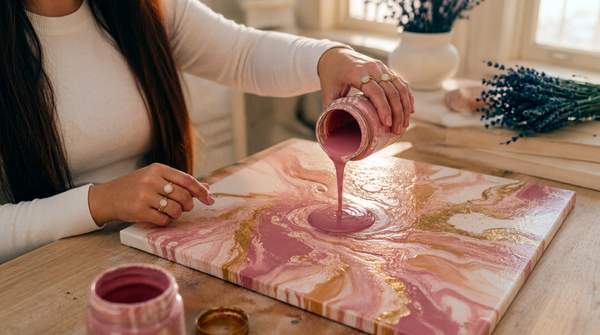
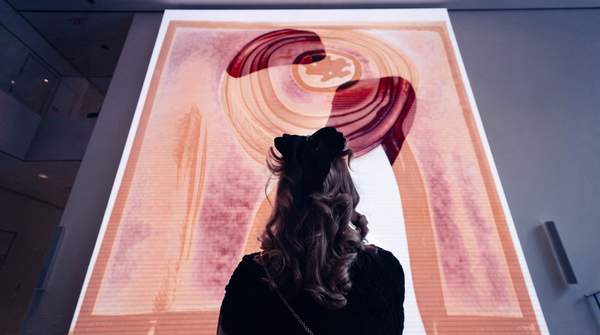
Maya Fuji’s '1PM: Clean·龍神と晴れ女' (2026), featured at EXPO CHICAGO 2026, according to Colossal, uses acrylic and glitter on a 48 x 60 x 1.5-inch canvas. This work boldly integrates glitter, a material often relegated to craft, into a large-scale fine art context. Its scale suggests 'intimacy' in contemporary art refers more to personal subject matter or material exploration than physical size.

LaKela Brown

LaKela Brown's sculpture 'Two Overlapping Collard Leaves' (2026), highlighted by Colossal for EXPO CHICAGO 2026, crafts a common botanical form from polyurethane and acrylic, measuring 23 × 8.5 × 2 inches. This transforms everyday objects using industrial materials, exemplifying a trend toward individual material experimentation that often stands apart from broader institutional recognition.

Tawny Chatmon

Tawny Chatmon's 'The Restoration / Made Whole Again' (2024-2025), noted by Colossal for EXPO CHICAGO, integrates embroidery and handstitched threadwork onto an archival pigment print, measuring 30 x 25 inches. This fusion of traditionally 'craft' materials into fine art deliberately blurs historical material hierarchies, elevating the unexpected and highlighting a trend towards individual material experimentation and intimate narratives.

Aliza Nisenbaum

Aliza Nisenbaum's 'Hitomi', an oil on linen painting measuring 66 x 57 inches, demonstrates how even traditional mediums remain relevant. Its inclusion among artists highlighted by Colossal for EXPO CHICAGO 2026 confirms its contribution to the evolving dialogue through scale and subject. While less overtly innovative in materials than Fuji, Chatmon, or Brown, Nisenbaum's work reinforces the power of individual artistic vision, even within established forms.

These diverse works collectively redefine art through unexpected material combinations and a focus on intimate, personal narratives, moving beyond traditional definitions of painting and sculpture. The prevalence of unconventional materials like glitter (Maya Fuji) and embroidery (Tawny Chatmon) suggests the art market increasingly values personal narrative and material innovation over traditional artistic hierarchies.

A Spectrum of Vision: Comparing Approaches

ArtistKey Work/AwardPrimary Medium/MaterialsScale/ImpactNoteworthy Trait
Jonathan Michael Castillo2026 Joyce Foundation Artadia AwardeeNot specified (often photography)Regional recognitionInstitutional validation
Nick Raffel2026 Chicago Artadia AwardeeNot specifiedRegional recognitionEmerging talent
Mindy Rose Schwartz2026 Chicago Artadia AwardeeNot specifiedRegional recognitionNuanced practice
Maya Fuji'1PM: Clean·龍神と晴れ女' (2026)Acrylic and glitter on canvasLarge (48 x 60 inches)Elevates craft materials
LaKela Brown'Two Overlapping Collard Leaves' (2026)Polyurethane and acrylicIntimate (23 x 8.5 x 2 inches)Transforms everyday objects
Tawny Chatmon'The Restoration / Made Whole Again' (2024-2025)Embroidery, threadwork on archival pigment printModerate (30 x 25 inches)Blends photography and textile
Aliza Nisenbaum'Hitomi' (2022)Oil on linenLarge (66 x 57 inches)Traditional medium, contemporary subject

Despite unique voices and material preferences, these artists share a commitment to material exploration and personal narrative, forming a cohesive, diverse movement. The juxtaposition of large-scale paintings like Fuji's with delicate, craft-based works by Chatmon and Brown confirms that 'intimate' in contemporary art refers less to physical size and more to deeply personal, often challenging, material choices.

How We Chose the Redefiners

The selection prioritized artists demonstrating innovative material use, significant recent recognition, and a clear trajectory of artistic development that challenges conventional boundaries. This included Artadia awardees and artists highlighted at major events like EXPO CHICAGO 2026, according to Navy Pier. While institutions validate artists, the true pulse of contemporary art's redefinition, as seen in works by Maya Fuji and LaKela Brown, lies in individual artists pushing material and conceptual boundaries, often outside of grand movements.

The Future is Fragmented, Personal, and Material

The cumulative impact of these artists suggests contemporary art's future lies in celebrating diverse, individual practices that challenge established norms through their making. This invites deeper engagement with the art object, shifting focus from collective ideology to singular vision. The blurring of lines between fine art and craft, evident in works by Tawny Chatmon and Maya Fuji, exemplifies this fragmented, materially rich future. Emerging artists forge distinct paths, elevating materials previously outside fine art. This fosters a nuanced appreciation of artistic intent. The art market will increasingly value these personal narratives and material innovations, pushing collectors and institutions to look beyond established conventions. By late 2026, institutions and collectors will need to adapt their acquisition strategies to embrace this growing emphasis on individual material experimentation and intimate storytelling. The continued recognition of artists like Jonathan Michael Castillo and the detailed attention given to works by Maya Fuji underscore this shift.

Your Questions About Emerging Art, Answered

What are the key trends in contemporary art in 2026?

Key trends in 2026 contemporary art emphasize material innovation, integrating 'craft' or industrial elements into fine art. Artists prioritize deeply personal narratives and intimate subject matter, moving away from universal political statements. Exhibitions like the Newcity Breakout Artists 2026 Exhibition, according to Chicago Artists Coalition, showcase this diversity.

Who are the most influential contemporary artists today?

Influential contemporary artists push material and conceptual boundaries through individual practices, not grand movements. Artists like Maya Fuji and LaKela Brown gain influence by recontextualizing everyday objects and materials. Awardees such as Jonathan Michael Castillo are recognized for their impact within specific regional art scenes. Their influence stems from challenging traditional art definitions.

How is contemporary art evolving in 2026?

Contemporary art in 2026 evolves through unique material engagements and personal narratives, not sweeping stylistic movements. This blurs historical material hierarchies, elevating unexpected mediums like glitter and embroidery into significant fine art statements. The shift encourages deeper engagement with the art object, valuing individual artistic choices over broad manifestos.