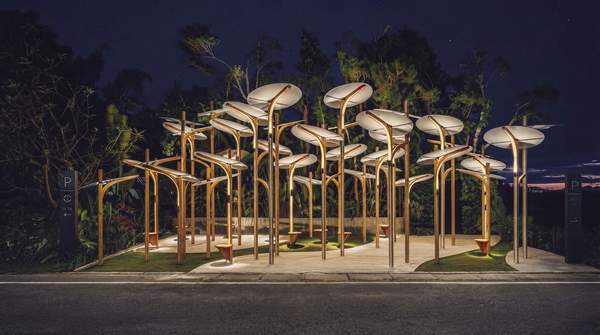
In a recent New York gallery, visitors didn't just observe a sculpture; they navigated a forest of moving bodies and projected light, blurring the line between spectator and participant. The scale of human interaction transformed the static space into a living, responsive environment.
Art has long categorized disciplines like painting or dance into distinct forms. Yet, contemporary installations intentionally dissolve these boundaries, creating unified, multi-sensory experiences. This tension between traditional separation and modern integration drives a new era of artistic expression.
Therefore, the future of art exhibition will likely lean towards increasingly immersive, interdisciplinary, and experiential forms, demanding new modes of curation and audience interaction. The evolving role of dance and visual art in contemporary installations is a trend set to continue into 2026.
Recent examples confirm this shift towards audience integration. At the Tate Modern, dancers interacted with a kinetic sculpture, actively changing its form in real-time, according to Art Forum. Visitors to 'The Infinite' VR experience reported feeling physically present within a digital dance performance, according to Wired. Further, one artist collective used biofeedback from audience members to alter the lighting and sound of a live dance piece, according to Creative Review. Such immediate immersion moves contemporary art beyond passive observation, inviting active engagement and redefining the viewer's role.
Beyond the Canvas: Defining Interdisciplinary Installations
Interdisciplinary installations prioritize experience over physical objects, integrating light, sound, movement, and space as a cohesive whole, as noted by the Journal of Art History. Unlike traditional stage performances, dance within these installations can be non-linear, looping, or interactive, unbound by a fixed stage, according to Dance Magazine. This approach challenges conventional definitions of art.
Visual art elements function not as backdrops, but as active participants, sometimes reacting directly to dancers or the audience, according to Sculpture Today. These works often exist for a limited time, emphasizing their ephemeral nature, as stated in Museum Studies Quarterly. This deliberate fusion creates a transient yet profound experience, shifting focus from static display to dynamic engagement.