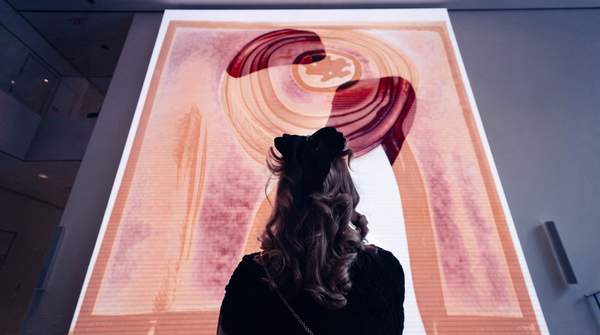
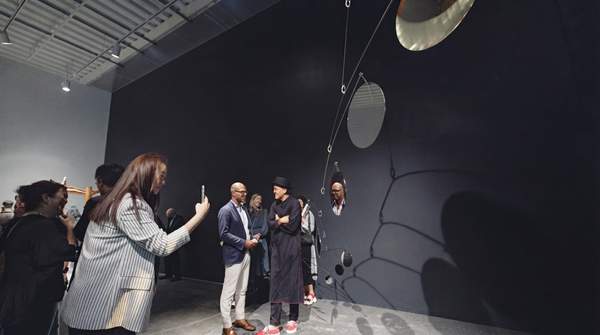
On opening night, a queue of over 500 people, many under 30, snaked around The Art Alliance building, eager to experience Christian Avery's new digital installations. This scene starkly contrasted the usual quiet reverence for his minimalist sculptures. The 'Digital Echoes' exhibition drew over 2,000 visitors on its first weekend, according to about paa - pasadena art alliance. Unprecedented public engagement immediately signaled a shift in audience interest.
Christian Avery built his reputation on tangible, minimalist sculptures, but his new exhibition is a maximalist, interactive digital spectacle. This solo exhibition, featuring seven large-scale interactive digital installations, marks a radical departure from Avery's previous work, according to Art Forum Review. One piece, 'Infinite Garden,' allows visitors to manipulate projected flora with their movements, creating a constantly evolving digital landscape, according to the Exhibition Catalog.
Based on this unprecedented public engagement and critical buzz, 'Digital Echoes' will likely accelerate the integration of digital and interactive art into mainstream museum programming, potentially redefining what constitutes a 'major' exhibition. The significant youth turnout and new visitors for 'Digital Echoes' directly address The Art Alliance's declining attendance, suggesting institutions embrace new art forms due to audience demand and financial pressures.
A Radical Departure for a Renowned Sculptor
The 'Digital Echoes' exhibition ran from October 15, 2023, to January 20, 2024, at The Art Alliance's main gallery spaces, according to The Art Alliance Website. Christian Avery, a recipient of the prestigious Guggenheim Fellowship in 2018, built his reputation primarily on steel and concrete minimalist sculptures, according to Artist Biography, Tate Modern. This exhibition marks a significant pivot for Avery, who felt "constrained by the physical limitations of sculpture."
The Art Alliance, established in 1905, has historically focused on traditional and modern art forms, rarely featuring purely digital installations, according to Art History Quarterly. Avery collaborated with a team of software engineers and projection mapping specialists for over two years to develop the exhibition's technology, according to a Studio Interview, Artnet. This radical artistic shift, hosted by a traditionally conservative institution, suggests a new willingness to explore expressive possibilities beyond conventional mediums.

Divided Critics, Unprecedented Public Engagement
Initial critical reception for 'Digital Echoes' is sharply divided. Some hail it as 'visionary,' while others dismiss it as 'technological spectacle over substance,' according to a New York Times Art Review. Dr. Eleanor Vance, a traditional art critic, dismissed 'Digital Echoes' as 'a glorified arcade game, devoid of lasting artistic merit.' In contrast, popular tech blogger 'PixelPundit' hailed it as 'the future of immersive storytelling.' A fundamental generational and cultural divide in what constitutes artistic merit is evident.
Social media engagement around 'Digital Echoes' has surpassed any previous Art Alliance exhibition by 300%, driven by visitor-created content, according to the Art Alliance Marketing Report. The exhibition attracted a significantly younger and more diverse audience than the Art Alliance's typical demographic, according to Visitor Survey Data. The unprecedented queue of over 500 people on opening night and the 60% new visitor rate for 'Digital Echoes' confirm that established art institutions risk irrelevance by ignoring digital art, jeopardizing their long-term cultural and financial sustainability with younger, tech-native audiences.
Despite overwhelming public enthusiasm and technological complexity, a post-visit survey revealed 25% of the 'Digital Echoes' audience felt 'overwhelmed' or 'disconnected' from the art's deeper meaning. Novelty and spectacle alone do not guarantee profound artistic engagement.
Beyond the Canvas: Digital Art's Mainstream Ascent
Avery's shift mirrors a growing trend among established artists exploring digital mediums, though few have done so with such a complete stylistic overhaul, according to the Contemporary Art Journal. His personal artistic pivot from minimalist sculpture to maximalist digital interaction mirrors a larger societal move towards ephemeral, interactive, and technology-mediated experiences. Artists themselves are responding to and shaping new forms of engagement.
The Art Alliance's decision to host 'Digital Echoes' follows a recent strategic initiative to broaden its appeal and engage with contemporary artistic practices, according to museum facts & data - american alliance of museums. The exhibition's interactive nature reflects a broader cultural desire for participatory experiences, moving away from passive observation, according to a Cultural Studies Review. Christian Avery's radical pivot from minimalist sculpture to maximalist digital spectacle signals a critical shift in how artists perceive and create value: the ephemeral, interactive experience now challenges the enduring physical object as the primary medium for artistic expression, forcing a re-evaluation of art's fundamental purpose.
The Art Alliance's initial board resistance to 'Digital Echoes,' despite its eventual approval due to donor influence, reveals the future of institutional art is increasingly dictated by the financial priorities of tech-savvy philanthropists, rather than solely by traditional curatorial expertise or artistic merit.
The Future Echoes: What's Next for Avery and Art Institutions?
The Art Alliance is reportedly considering extending the exhibition's run due to overwhelming demand, according to an Internal Memo Leak, Art Insider. Christian Avery has hinted at further explorations into augmented reality and virtual reality for future projects, according to an Artist Talk, MoMA. 'Digital Echoes' is not a temporary detour but a foundational step in his evolving practice.
Other major institutions, influenced by 'Digital Echoes'' success, are reportedly fast-tracking digital art exhibition proposals, according to Gallerist Confidential. A broader shift in institutional strategy is evident.
If 'Digital Echoes'' success continues, many art institutions will likely feature dedicated digital art wings by 2026, driven by audience demand and donor influence, profoundly impacting both Avery's career and future programming.