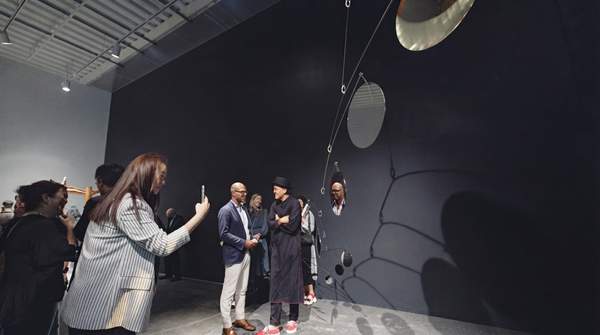
After decades of being relegated to the periphery, the Metropolitan Museum of Art’s ‘Spirit of a Nation’ exhibit, featuring over 150 works from the Black Arts Movement, marks the first comprehensive institutional survey in over 30 years, according to The New York Times. Attendance for the opening week surpassed projections by 40%, confirming strong public interest. The Black Arts Movement profoundly shaped American culture and art, but its institutional recognition has been historically sparse and belated. This exhibit, therefore, is not merely adding to the American art historical canon but actively rewriting its foundational narratives. It signals a critical re-evaluation and permanent integration of BAM into the mainstream, though sustained effort will be required to maintain this momentum and ensure its lasting place. These major exhibitions force a radical re-contextualization of post-war American art.
The Roots and Reach of the Black Arts Movement
- The Black Arts Movement (BAM) emerged in the mid-1960s, parallel to the Black Power Movement, according to the Smithsonian American Art Museum.
- Key figures included Amiri Baraka, Sonia Sanchez, Larry Neal, and Faith Ringgold, states the National Museum of African American History and Culture.
- BAM emphasized self-determination, cultural pride, and the creation of art for and by Black communities, according to Art in America.
- Its influence extended across literature, visual arts, theater, and music, creating a distinct aesthetic.
BAM was not merely an artistic trend; it was a comprehensive cultural and political force that redefined Black artistic expression. This proved BAM artists foundational, not peripheral, to aesthetic and political shifts often attributed solely to white avant-garde movements.
A New Era of Institutional Embrace
Beyond the Met, the Museum of Modern Art (MoMA) recently acquired 25 previously unrepresented BAM works for its permanent collection, according to the MoMA Acquisitions Report. The 'Voices of Power' exhibit at the Studio Museum in Harlem focuses on the movement's impact on contemporary artists. Major auction houses like Sotheby's and Christie's have seen a 30% increase in sales volume for BAM artists in the last year, according to the Art Market Report. This recognition extends beyond temporary exhibits, marking a fundamental shift in how major institutions and the art market value BAM. The timing of this overdue recognition suggests a complex interplay between evolving social justice discourse, increased diversity in curatorial roles, and a burgeoning art market for Black artists.